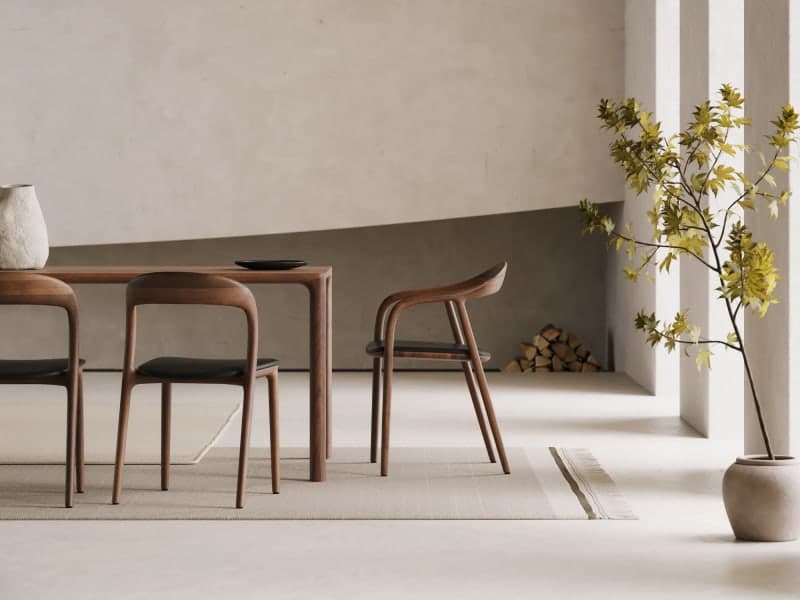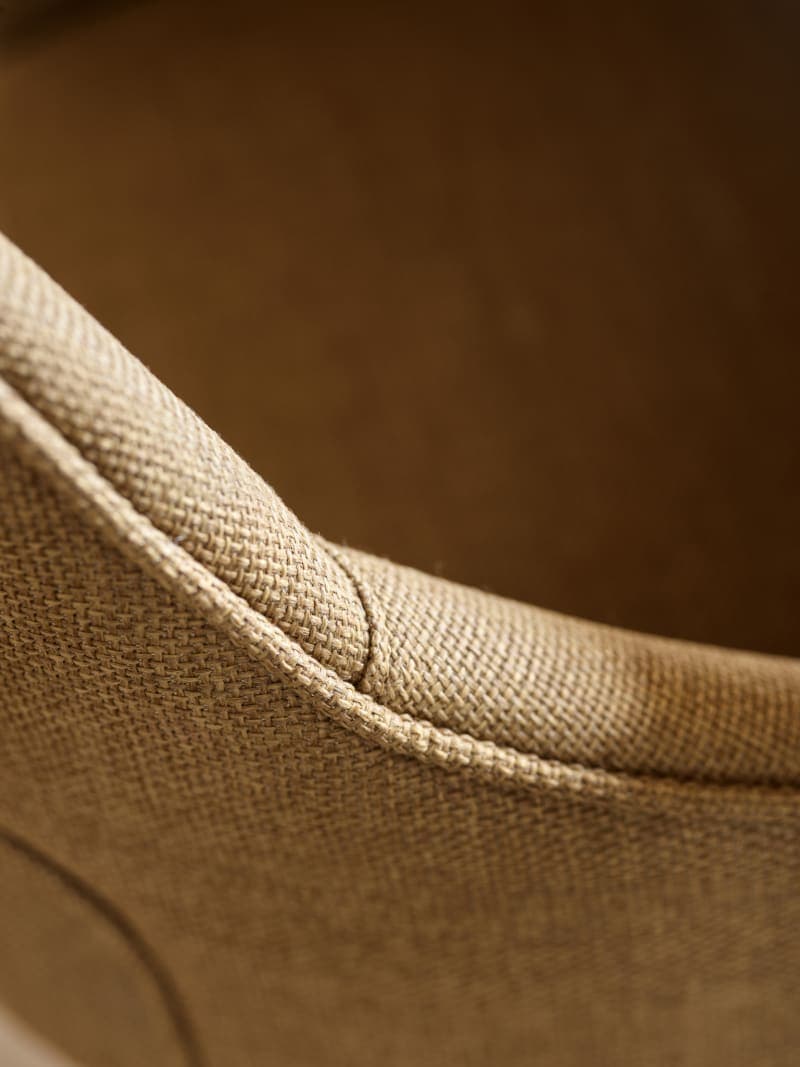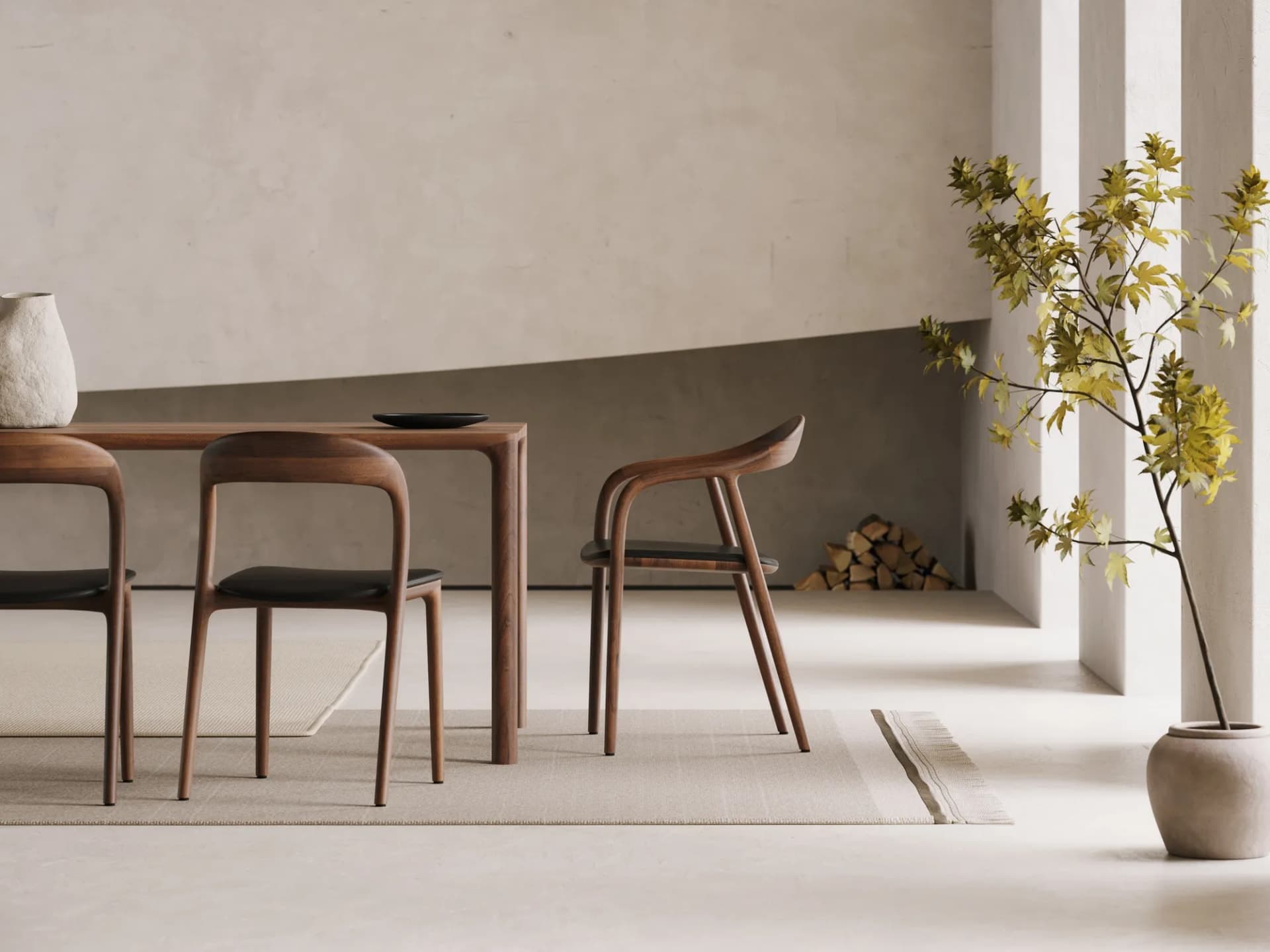
Furniture lasts when material, joinery and restraint are decided before anything is cut - durability is designed in, not finished on.
On this page
It starts with the material
Longevity begins with the timber and what was done to it before any tool touched it. Solid wood that has been brought down to the right moisture content for the climate it will live in behaves quite differently over decades than the same species rushed or left too wet: it stays flat, holds its joints and resists the splitting that a heated winter room exposes. A freshly felled log carries roughly 30 to 45 per cent moisture; furniture made for a heated European interior needs timber worked at around 12 per cent, give or take a few points. Get that wrong and no finish, brand or price compensates. The number nobody asks about is the one that decides whether a piece is sound in twenty years.
Among the houses we represent, Artisan makes the point concrete. It is a Bosnian maker that controls its whole process and dries its own timber naturally, at industrial scale, rather than buying boards in and hoping. That single decision — owning the slowest, least visible stage instead of outsourcing it — is the difference between furniture that merely arrives and furniture that lasts. We set out how that works in Inside Artisan, and the questions any buyer can use to test a maker in how to tell solid-wood furniture that will last.
Joinery over fixings
Most furniture does not fail in the wood; it fails at the joint. A mortise-and-tenon joint is a mechanical lock — one part seated into a matching socket and glued across face grain — so it behaves as a single structural unit and accommodates the wood's seasonal movement instead of fighting it. Screws and staples do the opposite: they resist movement, and across years of expansion and contraction they loosen, because the timber keeps moving and the metal does not. This is why turning a piece over tells you more than any showroom photograph. Structural joinery at the points that carry load is the clearest single signal that a piece was built to be kept rather than replaced.
Restraint as a design principle
The pieces that last tend to be the ones that ask for the least attention. Heavy decoration dates, chips and signals its decade; a quiet, well-proportioned form does not, which is why restraint is a longevity strategy as much as an aesthetic one. It is also how we think about interiors at Robin Gregory Interiors: a room resolved around how it is used, in materials chosen to age rather than impress on day one, holds together far longer than one assembled for the photograph. The same logic runs through the houses we carry — it is, in plainer terms, the case made in designing around how you live.
Working on a project, or curious about the brands?
Begin a conversation