Hospitality furniture is specified well when it is judged on what it will cost to keep, not what it costs to buy, because a hotel or restaurant subjects a piece to more use in one year than a home delivers in ten. Almost every expensive failure in a fit-out traces back to a decision made on appearance or unit price that ignored how the piece would actually live. This is a guide to the decisions that matter, in the order they matter.
On this page
Introduction
Hospitality furniture is specified well when it is judged on what it will cost to keep, not what it costs to buy, because a hotel or restaurant subjects a piece to more use in one year than a home delivers in ten. Almost every expensive failure in a fit-out traces back to a decision made on appearance or unit price that ignored how the piece would actually live. This is a guide to the decisions that matter, in the order they matter.
The principle: specify to the use, not the photograph
A residential brief asks whether a piece is right for a room. A hospitality brief asks whether it will still be right after a thousand strangers have used it without care, after cleaning crews have wiped it daily with whatever they were given, and after a maintenance team has moved it a hundred times. Those are different questions, and the second is the one that decides the budget over the life of the project.
The discipline is to treat durability, maintenance and replacement as the primary specification, and appearance as the constraint within it, rather than the other way round. A piece that looks right and fails in eighteen months is not a saving. It is a deferred invoice with disruption attached, because in hospitality the cost of replacement is rarely the furniture; it is the room out of service while it happens.
Textiles: the number, not the swatch
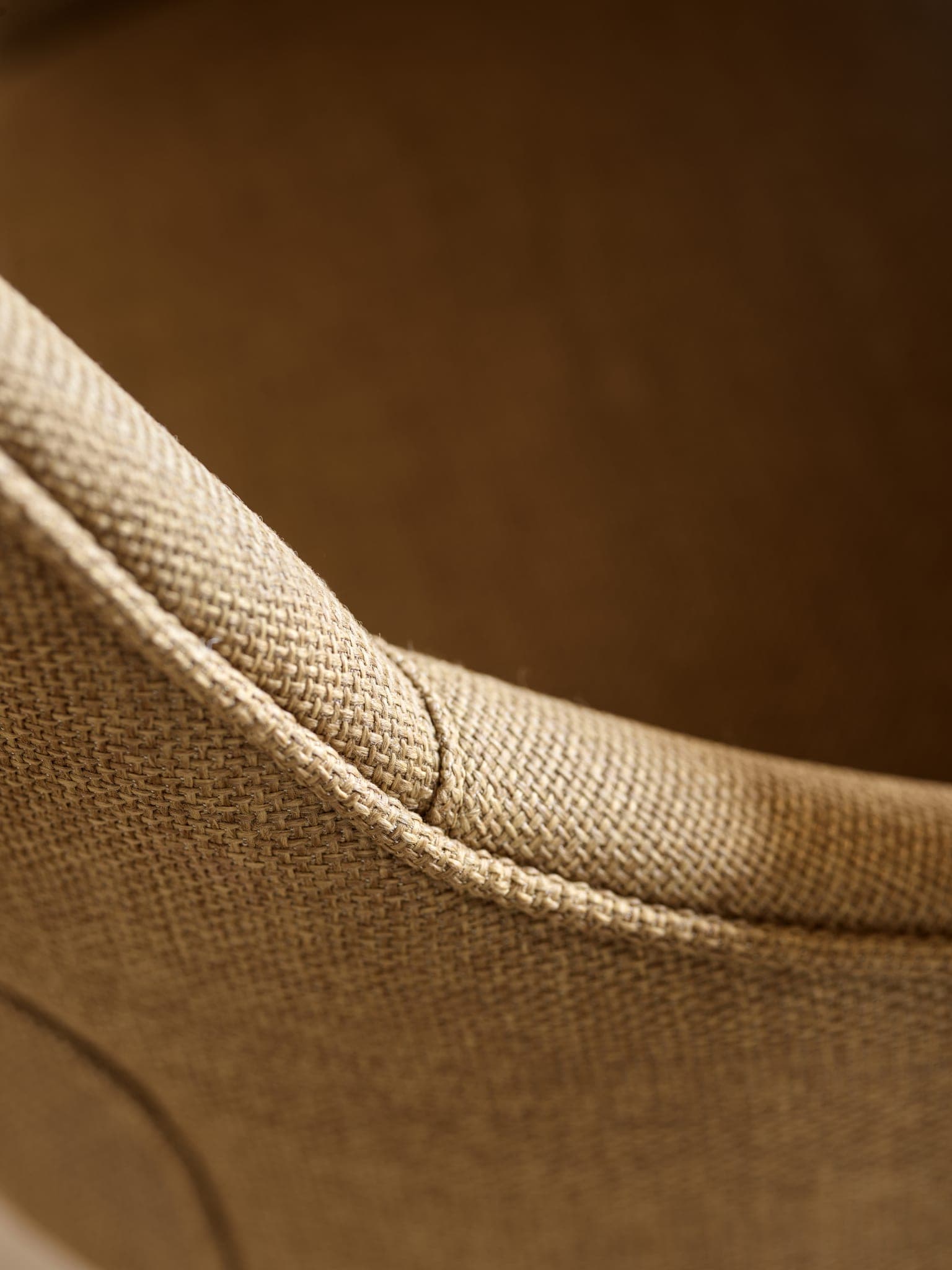
Upholstery is where hospitality specifications most often go wrong, and it is the easiest to get right because there is a number. Abrasion resistance is measured, and European specifications typically report it as a Martindale rub count: lighter domestic use sits in the lower tens of thousands of cycles, while demanding contract use generally calls for substantially higher, often forty thousand and above depending on the setting. North American contract work more often cites the Wyzenbeek double-rub figure; the two are not interchangeable and a fabric strong in one is not automatically strong in the other.
The rule is simple and routinely ignored: the swatch tells you nothing about whether a fabric belongs in a restaurant banquette, and the rating tells you almost everything. Specify the rating to the use, ask how colour and performance hold across production runs, and remember that fire performance for contract textiles and carpets is a regulated matter that varies by country, so it has to be verified against local requirements rather than assumed. On the carpet side, this is one reason wool recurs in hospitality: it resists crushing under heavy traffic and has a relatively high ignition temperature, charring and self-extinguishing rather than melting, which aligns with the safety expectations of public interiors.
Case goods and seating: the joint decides the lifespan
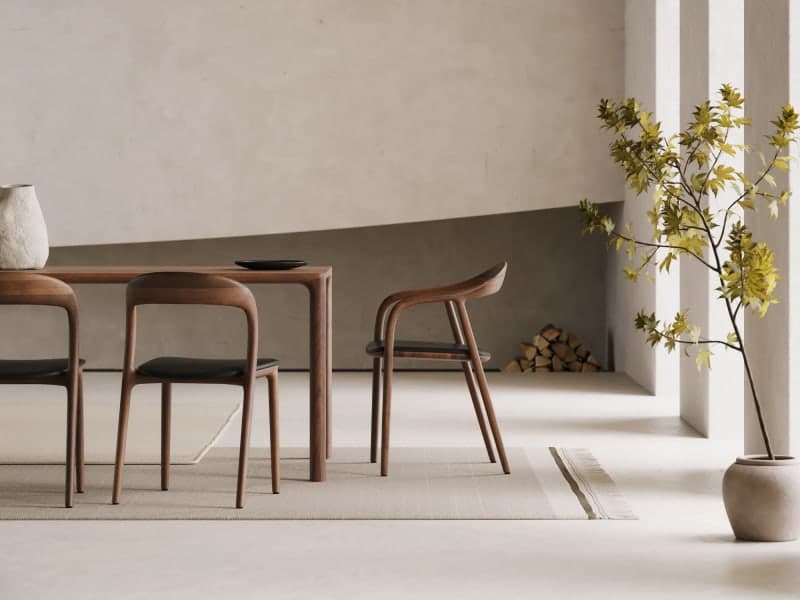
For tables, casework and chairs, the question is structural, and chairs are the hardest case in any hospitality interior because they take dynamic load every time someone sits, leans or drags them. The joint, not the timber, is where they live or die. Mortise-and-tenon and comparable structural joints lock mechanically and accommodate movement, which is why properly built frames stay sound through years of restaurant and hotel use. Fasteners standing in for joints loosen under exactly the cyclic stress hospitality delivers in abundance.
Solid timber earns its place here when it is dried correctly and built to be repaired, because a repairable chair is a chair that does not become a replacement order. This is the logic behind specifying a vertically controlled maker such as Artisan for contract quantities: consistency across a batch and a structure that can be maintained rather than discarded. The relevant question to any maker is not "how does it look" but "what happens to this joint after three years of service", and the answer should be specific.
Outdoor and terrace: the hardest brief in the building
The terrace is where hospitality specifications fail most quietly, because outdoor furniture is judged in spring and punished by the time autumn arrives. Outdoor pieces face ultraviolet, moisture, temperature swing and far rougher handling than anything indoors, and the failure points are specific: frames that trap water rather than shed it, fixings that corrode, textiles that fade or hold damp, and finishes that were specified for an interior life. The decisive questions are how the frame is constructed and drained, whether fabrics are genuinely outdoor-rated rather than indoor fabrics used optimistically, and how the pieces behave through a wet winter in store rather than only in use.
This is also where single-source coherence pays back hardest. A terrace that has to read as part of the same scheme as the interior, while surviving a different climate, is exactly the kind of transition that fails when it is assembled from separate suppliers. A collection with a properly engineered outdoor range, rather than indoor pieces relabelled, is the difference between a terrace that ages with the building and one that is replaced every few seasons.
A specification order that prevents the usual failures
Run a hospitality specification in this sequence and most of the common failures disappear. First, define the use honestly: traffic level, cleaning regime, how often pieces will be moved, and the local fire requirements that apply. Second, set durability thresholds before selecting anything, the Martindale or equivalent rating for every textile, the construction standard for every seat and table. Third, design the material language as a whole so the lobby, the restaurant and the terrace read as related, because coherence is decided before individual pieces are chosen, not patched together after. Fourth, resolve bespoke and lead time early, since contract work is almost always custom in some respect and the houses that handle bespoke well are not always the ones with the best catalogue. Fifth, plan maintenance and replacement parts at specification, not at failure, because the project that knows how it will be repaired is the one that lasts.
What most people get wrong
The most common mistake is specifying on appearance and unit price and discovering the real cost in year two. The second is treating the textile rating as a formality rather than the decision, then reupholstering an entire restaurant ahead of schedule. The third is sourcing every element from a different supplier and finding the scheme never quite resolves, because no one owned the whole. The fourth is leaving bespoke and lead time until last, then compromising the design to whatever can be delivered in time. None of these is exotic. They are simply what happens when a hospitality brief is specified as if it were a domestic one.
How we work on hospitality projects
For the showrooms, architects and interior designers we work with across Switzerland, Liechtenstein, Austria and northern Italy, hospitality is where the agency and the studio overlap most usefully. Robin Gregory Interiors runs as both a furniture agency and an interior design studio, which means we specify the houses we represent into contract projects ourselves and live with the result, rather than selling pieces and moving on.
The houses we carry each answer part of a hospitality brief: Artisan for solid-wood case goods and seating built to be maintained, Scapa Home Collection for a coordinated textile-led scheme across multiple spaces, and House of Wool for carpets that survive heavy traffic and meet the safety expectations of public interiors. If you are specifying a hotel, restaurant or members' space, contact us with the brief and we will tell you honestly which of them fits, and which questions to put to any maker before you commit. For the wider picture of how the agency works across these markets, see how a European furniture agency works for showrooms and designers.
Frequently asked questions
What is the most important factor in specifying hospitality furniture?
Whole-life cost, not purchase price. Hospitality use compresses a decade of domestic wear into a year, so durability, maintainability and replacement should be the primary specification, with appearance treated as the constraint within it. Pieces chosen on looks or unit price alone are the most common source of expensive failure.
What Martindale rating do I need for contract upholstery?
European contract environments generally require substantially higher abrasion resistance than domestic use, often around forty thousand Martindale cycles or more depending on the setting, against lighter domestic use in the lower tens of thousands. North American work often cites Wyzenbeek double rubs instead; the two measures are not interchangeable, so match the rating to the actual use.
Why does joinery matter more in hospitality than at home?
Hospitality furniture, especially seating, takes constant dynamic load and frequent moving. Most failures occur at the joint, not in the material. Mortise-and-tenon and comparable structural joints accommodate stress and movement and stay sound for years; fasteners substituting for joints loosen quickly under exactly that kind of use.
Is wool a good choice for hospitality carpets?
Generally yes. Wool resists crushing and matting under heavy traffic and hides soil through its fibre structure, and it has a relatively high ignition temperature, charring and self-extinguishing rather than melting. Construction still has to suit the traffic, and local fire requirements must be verified, but the fibre aligns well with public-interior demands.
How should bespoke and lead times be handled on a fit-out?
Resolve them first, not last. Contract work is almost always custom in some respect, and leaving bespoke and lead time until the end forces design compromises to whatever can be delivered in time. Specify the bespoke elements and confirm realistic lead times before the scheme is locked.
Who should I talk to about a hospitality specification?
Robin Gregory Interiors works as both a furniture agency and an interior design studio across Switzerland, Liechtenstein, Austria and northern Italy. Contact us with the brief, the spaces, traffic, cleaning regime and constraints, and we will advise honestly on which of the houses we represent fits and what to verify before committing.
Sources and further reading
Textile-industry references on the Martindale and Wyzenbeek abrasion measures and typical domestic versus contract thresholds.
Fibre-science and wool-industry references on wool's resilience and ignition behaviour in contract interiors.
Joinery references on why mortise-and-tenon and structural joints outperform fasteners under cyclic load.
Robin Gregory Interiors: the agency, Inside Artisan, Scapa Home and House of Wool.
Working on a project, or curious about the brands?
Begin a conversation